


Did you know that…? “"Heart disease in dogs"” Most of these are chronic conditions that require long-term care.
But how can we help him stay with us for as long as possible? First, we need to understand the disease, how to closely monitor his symptoms, and how to adjust our parenting practices appropriately.
Heart disease in dogs This condition is when the heart is not functioning at its full capacity (mostly due to leaky heart valves or age-related heart muscle degeneration). As the heart weakens, it can't pump blood to the body and lungs as efficiently as before. This results in your dog becoming easily tired, coughing, and having difficulty breathing in the sun.
โรคหัวใจที่พบได้บ่อยในสุนัข
ในสุนัขอายุมากหรือบางสายพันธุ์ มักพบโรคหัวใจเหล่านี้ได้ค่อนข้างบ่อย แบ่งได้คร่าวๆ ดังนี้
- Heart valve degeneration (common in small dog breeds)
- Myocardial degeneration
- Heartworm Disease
วิธีสังเกตอาการสุนัขที่อาจเป็นโรคหัวใจ
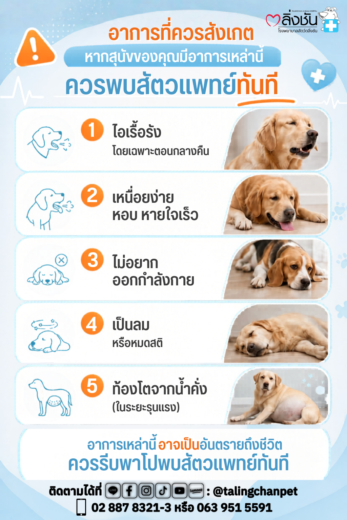
- ไอคอกแคกไม่ยอมหาย โดยเฉพาะตอนดึกๆ หรือตอนตื่นนอน เหนื่อยง่าย หอบ หายใจเร็ว
- Easily fatigued, out of breath when standing, ribcage shifting, breathing faster than normal.
- I don't want to play, I don't want to run. I only walk a little bit before I want to lie down.
- Suddenly feeling faint, collapsing, or losing consciousness.
- พุงขยายใหญ่ ท้องบวมป่องเพราะมีน้ำคั่งข้างใน (สัญญาณว่าอาการเริ่มแย่แล้ว)
How to care for a dog with heart disease.
1. ให้ยาตามสัตวแพทย์อย่างเคร่งครัด
ยาที่ใช้มักช่วยลดภาระการทำงานของหัวใจ ขับน้ำส่วนเกินออกจากร่างกายควบคุมความดัน ห้ามหยุดยาเองเด็ดขาด แม้อาการจะดีขึ้น
2. ควบคุมอาหาร
เลือกอาหารสูตร โซเดียมต่ำ หลีกเลี่ยงอาหารคน ของเค็ม ของมัน ควบคุมน้ำหนักไม่ให้อ้วน น้ำหนักเกิน = หัวใจทำงานหนักขึ้น
3. ออกกำลังกายแบบพอดี
ไม่ควรออกแรงหนัก เช่น วิ่งหรือกระโดดมาก เน้นเดินเบาๆ สม่ำเสมอ ถ้าเริ่มหอบ ให้หยุดทันที
4. จัดสภาพแวดล้อมให้สบาย
อากาศถ่ายเท ไม่ร้อนอบอ้าว หลีกเลี่ยงความเครียด มีที่นอนนุ่มและเงียบสงบ
5. Monitor symptoms regularly.
Monitor the heart periodically (e.g., X-ray, ultrasound), assess the response to medication, and adjust the treatment plan as necessary.
6. Monitor your breathing at home.
A simple method: Count the breathing rate during sleep (normally < 30 breaths/minute). If it's higher or the animal is breathing heavily, you should take it to a veterinarian.
สัญญาณอันตรายของสุนัขที่เป็นโรคหัวใจ
หรือ อาการฉุกเฉินสำหรับสุนัขที่เป็นโรคหัวใจ ที่บ่งบอกว่าควรรีบพาไปพบสัตวแพทย์โดยด่วน
- Severe shortness of breath, difficulty breathing.
- Pale or green gums
- Fainting or having a seizure.
- Severe and persistent coughing.
Important things to know.
In many cases, heart disease in dogs is incurable.
However, with proper and consistent care, symptoms can be controlled, lifespan can be extended, and quality of life can be improved.