

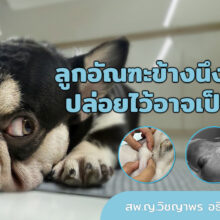
What is cryptorchidism? Cryptorchidism is a common abnormality in male dogs and cats, but it's not normal. It requires surgical removal; it shouldn't be kept. How do you know if your dog's testicle is missing? In the case of Chocolate Chip, our handsome French Bulldog, his owner noticed he only had one testicle and brought him to Taling Chan Animal Hospital. Dr. Ae (Dr. Wichayaporn Athikanon) used an ultrasound to locate the missing testicle, which was found hidden in the groin. This condition, where the testicle isn't in the scrotum, is called cryptorchidism...
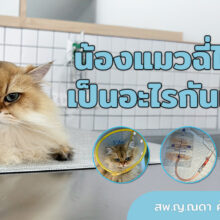
A cat was rushed to the hospital with symptoms of inability to urinate, lethargy, and vomiting—dangerous signs of urinary tract obstruction. This is the case of "Charles," a 3-year-old British Longhair cat who suddenly became lethargic, vomited, and most frighteningly, couldn't urinate, requiring an emergency hospital visit! 🔍 What happened to Charles? Upon arrival at Dr. Bua's clinic…
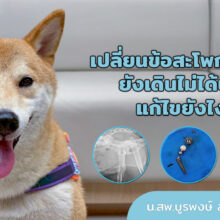
Despite having undergone hip replacement surgery previously, Tora, a Shiba Inu, has continued to experience leg pain for the past year. Before treatment at Taling Chan Animal Hospital, Tora, a 2-year-old Shiba Inu, was unable to put weight on his hind leg, even after a previous hip replacement surgery elsewhere and consistent physical therapy. The owner consulted with Dr. Tang, who concluded that surgery was needed to remove the old hip replacement. What happened to the hip replacement Tora had? During the surgery, Dr. Tang discovered the cause of Tora's chronic pain: a loose material – the metal stem in the femur had dislocated from its original position…

Many people may think that fat cats look cute, cuddly, and round with short legs. Seeing them on social media makes them even more adorable. But in fact, obesity is posing many health risks to cats, which many owners may overlook. Why do cats become obese so easily? Most house cats live in confined spaces and have less activity than outdoor cats. They also receive high-energy, tasty processed food, making them easy to eat and enjoyable. When they eat too much but use little energy, their bodies accumulate fat, leading to obesity. Risks of Overweight Cats Allowing cats to become obese not only makes them walk limply, but also increases the risk of several serious diseases, such as feline diabetes (Diabetes Mellitus). Obese cats are at a higher risk of developing diabetes…

Many people may not know that… in addition to humans, pets can also donate their bodies to be “master teachers” for veterinary students to learn about real body structures and help develop treatments for other animals in the future.

First, let’s get to know what copper testicles are. Copper testicles are abnormalities in the testicles that do not descend into the scrotum. They can occur on one or both sides, causing them to remain in the groin or abdomen. They can occur in both male dogs and cats. Dog breeds that are at risk of copper testicles include Chihuahuas, Pomeranians, Poodles, Yorkshire Terriers, and Schnauzers. Cat breeds that are at risk of copper testicles include Persians and Ragdolls. The cause of copper testicles is a genetic disorder that is passed on as a recessive gene to the offspring. We can clearly observe this abnormality when the dog reaches the age of…

Kidney Stones, a problem that causes dogs and cats to be unable to urinate (Urinary Stones) Dogs can't urinate, cats go to the bathroom for a long time but only pee a little bit, or sometimes the urine that comes out is dark with blood mixed in. These problems may be caused by the urinary tract of the little ones that have sediment or mineral crystals accumulated, or what we know as kidney stones. Today, Talingchan Animal Hospital will answer questions about kidney stones for owners to hear what kidney stones are and how to deal with them. What are kidney stones? Kidney stones are caused by the accumulation of mineral sediment until it becomes a stone. It affects the health and behavior of pets. It is a health problem that occurs in the urinary tract. It can occur from the kidneys, ureters, bladder, and urethra...

Many people, including pet owners, already know that sterilization is a permanent method of birth control. However, many people may not know that sterilization for dogs and cats also has other benefits besides birth control, such as reducing the chances of various diseases that may occur in our pets. Today, Talingchan Animal Hospital will share information about sterilization for dogs and cats. Sterilization of dogs and cats * Although sterilization can be started from 4 months old and up, in terms of appropriateness, it is recommended to be done at 6 months old and up for the safety of the sterilized pet. ** Sterilization does not only depend on the age of the dog or cat, but also the weight of the pet must be taken into account...

Proper and adequate nutrition is essential for dogs and cats of all ages to enable their bodies to grow, repair worn-out parts, and perform normal activities in life. This is especially important for sick animals and during recovery from illness or after surgery. Most sick animals during recovery often do not receive enough food due to decreased appetite due to illness, resulting in weight loss, loss of muscle mass, and impaired immune and metabolic systems. Meanwhile, sick animals’ body requires more energy and nutrients, leading to malnutrition, increased risk of further illness from various complications, and increased mortality. Therefore, today, Talingchan Animal Hospital will tell you about important nutrients for sick animals. Important nutrients in food for sick and convalescent animals 1. Essential amino acids…

Pet Physical Therapy Program using an Underwater Treadmill. Underwater Treadmill Rates: Weight | Fee/Session | Package (9+1) | 1-15 kg: 810 THB | 7,450 THB | >15-25 kg: 930 THB | 8,695 THB | >25 kg: 1,060 THB | 9,935 THB *Veterinary fees not included…