


Dog owners often worry about whether to neuter their dogs due to fears about possible side effects. But neutering can have more positive effects on dogs than many people realize.

What is arthritis? Arthritis is a degenerative disease of the joints that results in pain and loss of joint function, and subsequently affects the bones and tissues around them. It requires multiple management strategies, including medication to reduce and relieve the symptoms, and other management strategies, with obesity being one of the factors that must be managed. Weight on arthritis Normally, joints can function well when the pressure from the animal’s weight is balanced, due to the circulation of fluid in the joints, increased drainage of joint fluid, and the circulation of nutrients in the joints. However, in the case of animals that are overweight, excessive pressure on the joints can have adverse effects on the cartilage around the joints and can eventually develop into arthritis. Adipose tissue in the body on arthritis Studies have found that animals with a large amount of adipose tissue in the body produce more inflammatory mediators that affect cartilage and joints and the synovial membrane than normal, causing joint degeneration and inflammation. Can weight loss help reduce joint inflammation? …

What is arthritis? Arthritis is a degenerative condition of the joints that results in pain and loss of joint function, subsequently affecting surrounding bones and tissues. Management requires a multifaceted approach, including medication to reduce and alleviate symptoms, and other management factors. Obesity is one factor that needs to be managed. Weight and arthritis: Normally, joints function well under balanced pressure from the animal's weight due to improved synovial fluid circulation, increased waste drainage, and nutrient flow. However, in overweight animals, excessive pressure on the joints can lead to damage to the cartilage surrounding the joints and eventually the development of arthritis. Body fat and arthritis: Studies have shown that animals with high levels of body fat produce higher levels of inflammatory mediators that affect cartilage, joints, and the synovial membrane, ultimately leading to joint degeneration and inflammation. Can weight loss help reduce joint inflammation? Research has shown that overweight animals experience reduced weight-bearing on their legs, while conversely, losing weight allows for increased leg weight-bearing and can reduce the severity or delay the onset of arthritis. In short, being overweight negatively impacts leg use and can predispose to arthritis. Therefore, owners should pay close attention to their pets, including providing appropriate nutrition, regular exercise, and regularly checking for any abnormalities related to arthritis.
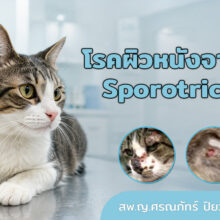
Makrut, a stray cat, approximately 5 years old, was brought in for treatment by his owner with skin sores spreading across his face, nose, body, legs, and tail. The sores were raised, with some areas becoming pitted and filled with blood and lymph. Veterinarians examined cells from the sores and found a deep fungal infection, known as Sporotrichosis. The disease is most commonly caused by the Sporotrix schenckii bacteria, a common environmental pathogen transmitted through wounds or bites. It can also be transmitted to mammals such as dogs or…

Symptoms of rabbits that may indicate that they are sick, so the owner must observe and pay attention to the following symptoms that change. If your rabbit shows any abnormal symptoms, you should take it to see a veterinarian immediately. 5 signs that your rabbit is sick 1. Not cheerful, weak, and eating less: Almost every sick rabbit will show these symptoms. To find the symptoms quickly, the owner should observe the amount of food and water that the animal eats every day. 2. No feces or more feces than usual: Rabbit gastrointestinal stasis (RGIS) is a group of symptoms that often occur after the rabbit stops eating. The digestive system will work less. The contractions of the digestive tract are reduced…

The cause of colds in chickens is a virus, and sometimes it can be caused by bacteria as well. Symptoms of chicken illness ... the breeder will notice it in a simple way, that is, the chicken will have clear mucus flowing from the nose. The chicken will have a few tears. Later, the mucus will gradually thicken, turn white, clear, yellow, and form a crust on both nostrils. Symptoms of chickens.. will show symptoms by having difficulty breathing, breathing loudly, especially at night, which will be clearly audible, or having frequent coughing or sneezing. If it is severe, the chicken will show symptoms of swelling of the face and eyes, or in common language called (swollen face disease), swollen eyes, a lot of tears. 🐔 Treatment is by giving antibiotics and reducing swelling and inflammation to feed and monitoring the symptoms. Veterinarian in charge: Dr. Sirikanya Chang-ekwong (Dr. Joy), Department of Special Animal Treatment (Exotic), Department of Internal Medicine

The owner of the baby sun conure consulted via Facebook about the slow digestion of the baby sun conure. The doctor informed that there are many causes of slow digestion - the food is too concentrated - the food is not at the right temperature, not cooked properly - eating too much at one meal and not being able to digest it quickly - the room temperature is too cold, needing to use a fire to help - infectious disease. Slow digestion or indigestion is quite dangerous for baby birds because if the food is not digested and spoils in the rumen, it is at risk of infection. Initially, the doctor collected samples from the rumen and examined but did not find any fungus or yeast. The doctor treated the baby by giving microorganisms to help digest food better and recommended feeding methods. He also observed that if the food is not digested again, he would have to suck out the food from the rumen before it spoils to prevent infection. Veterinarian in charge: Dr. Nunree Trirattananuwong (Dr. Air), Department of Exotic Animals

Canine Hip Replacement Surgery: Advances in Dog Treatment for Improved Quality of Life. Hip dysplasia is a common disease in all dog breeds, ages, and sexes. Symptoms include difficulty walking, limping, dragging legs, and in some cases, bunny-hopping. In severe cases, dogs may stop walking altogether. Prolonged inability to walk can lead to muscle atrophy and permanent disability. The disease is often hereditary, present from birth. [Images of pre-operative and post-operative x-rays are included.] At what age should dogs be screened for hip dysplasia?

X-rays and ultrasounds are often used together to diagnose diseases, predict diseases, and monitor treatment results. This is because these techniques are easy to perform, do not take long, and are cost-effective. They help answer questions and find the cause of the disease accurately and in a timely manner. Therefore, they are widely used in our veterinary community. Benefits of X-rays X-rays help diagnose diseases and abnormalities of animal organs in every part of the body, including the head, body, chest, abdomen, and legs, from finding specific abnormalities such as broken leg bones, dislocated joints…

"My name is Krang. I'm a mixed breed dog. I'm about 6 months old. I came to Taling Chan Animal Hospital because I got caught in the right lip with a fishhook." A dog named "Krang", a mixed breed, about 6 months old, came to Taling Chan Animal Hospital because I got caught in the right lip with a fishhook. When I arrived at the hospital, Dr. Sun (Dr. Thitikorn Eksirirat) removed the hook by cutting the barb and taking it out. It was necessary to sedate the dog first...