


X-rays and ultrasounds are often used together to diagnose diseases, predict diseases, and monitor treatment results. This is because these techniques are easy to perform, do not take long, and are cost-effective. They help answer questions and find the cause of the disease accurately and in a timely manner. Therefore, they are widely used in our veterinary community. Benefits of X-rays X-rays help diagnose diseases and abnormalities of animal organs in every part of the body, including the head, body, chest, abdomen, and legs, from finding specific abnormalities such as broken leg bones, dislocated joints…

Chronic kidney disease is a common condition in dogs and cats, especially in older animals. The most important management in this condition is proper dietary management, such as limiting protein and certain minerals, supplementing with vitamins and essential fatty acids. Before the veterinarian manages the animal's diet, a physical examination should be performed to see if it is overweight or underweight, how much muscle mass it has, and an assessment of the severity of the kidney disease, such as blood tests and kidney ultrasounds. After the physical examination, the animal's diet can be managed, controlling the amount of certain minerals that affect the kidneys, such as phosphorus, sodium, and potassium. The animal should also be fed with an appropriate amount of protein, not too much or too little, because too little will make the animal's body's performance worse and it will become thin. Alternatively, certain vitamins can be supplemented, such as vitamin B, essential fatty acids, such as...

Rabies, a Danger Closer Than You Think Rabies, a Danger Closer Than You Think It's time for us to understand more about this disease so that we can safely cope and help stop the spread of rabies. Rabies is caused by the Rabies virus (pronounced Rabies) that destroys the central nervous system, causing madness. The rabies virus is spread through the saliva of animals that are carriers of the disease through a bite, making the disease contagious to humans and other animals. After being infected, symptoms will appear within 21 to 60 days. This virus is destroyed by heat, sunlight, and dryness. It is also easily destroyed by soap and water and common disinfectants...

Dog owners often worry about whether to neuter their dogs due to fears about possible side effects. But neutering can have more positive effects on dogs than many people realize.

Vaccinate against rabies and donate dog food to stray dogs at Dog Island, which has more than 400 dogs. Talingchan Animal Hospital has vaccinated against rabies and donated dog food to stray dogs at Dog Island, which has more than 400 dogs. The team was led by Dr. Kanokphan Chotikavanich (Dr. Tik) and Dr. Wichaporn Athikanon (Dr. Ae), along with staff from Talingchan Animal Hospital who came to help vaccinate the stray dogs at Dog Island today. This activity is something that Talingchan Animal Hospital has done every year, and this year is the 10th year…

Such a sudden cold spell can be frightening not only for humans but also for our dogs. In this cold weather, remember to take care of your own health and your dog's health. Cold weather often brings colds and respiratory illnesses, so it's essential to keep your dog warm with a warm coat. Provide a soft bed or blanket for your dog to sleep on and avoid letting them sleep in windy areas. Cold weather also increases the risk of infectious diseases like distemper, enteritis, and diarrhea, as viruses survive longer in the environment. Food left out also allows bacteria to grow, so warm up your dog's food and remove it immediately after feeding.

What is arthritis? Arthritis is a degenerative disease of the joints that results in pain and loss of joint function, and subsequently affects the bones and tissues around them. It requires multiple management strategies, including medication to reduce and relieve the symptoms, and other management strategies, with obesity being one of the factors that must be managed. Weight on arthritis Normally, joints can function well when the pressure from the animal’s weight is balanced, due to the circulation of fluid in the joints, increased drainage of joint fluid, and the circulation of nutrients in the joints. However, in the case of animals that are overweight, excessive pressure on the joints can have adverse effects on the cartilage around the joints and can eventually develop into arthritis. Adipose tissue in the body on arthritis Studies have found that animals with a large amount of adipose tissue in the body produce more inflammatory mediators that affect cartilage and joints and the synovial membrane than normal, causing joint degeneration and inflammation. Can weight loss help reduce joint inflammation? …

What is arthritis? Arthritis is a degenerative condition of the joints that results in pain and loss of joint function, subsequently affecting surrounding bones and tissues. Management requires a multifaceted approach, including medication to reduce and alleviate symptoms, and other management factors. Obesity is one factor that needs to be managed. Weight and arthritis: Normally, joints function well under balanced pressure from the animal's weight due to improved synovial fluid circulation, increased waste drainage, and nutrient flow. However, in overweight animals, excessive pressure on the joints can lead to damage to the cartilage surrounding the joints and eventually the development of arthritis. Body fat and arthritis: Studies have shown that animals with high levels of body fat produce higher levels of inflammatory mediators that affect cartilage, joints, and the synovial membrane, ultimately leading to joint degeneration and inflammation. Can weight loss help reduce joint inflammation? Research has shown that overweight animals experience reduced weight-bearing on their legs, while conversely, losing weight allows for increased leg weight-bearing and can reduce the severity or delay the onset of arthritis. In short, being overweight negatively impacts leg use and can predispose to arthritis. Therefore, owners should pay close attention to their pets, including providing appropriate nutrition, regular exercise, and regularly checking for any abnormalities related to arthritis.
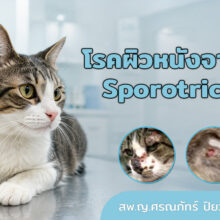
Makrut, a stray cat, approximately 5 years old, was brought in for treatment by his owner with skin sores spreading across his face, nose, body, legs, and tail. The sores were raised, with some areas becoming pitted and filled with blood and lymph. Veterinarians examined cells from the sores and found a deep fungal infection, known as Sporotrichosis. The disease is most commonly caused by the Sporotrix schenckii bacteria, a common environmental pathogen transmitted through wounds or bites. It can also be transmitted to mammals such as dogs or…