
Hip dysplasia in dogs
This disease can occur in all breeds of dogs. This disease is caused by abnormalities in the development of the hip joints, which can lead to joint degeneration in the future. When a dog begins to have hip degeneration, it causes pain in various joints in the body, resulting in the dog walking abnormally and having a reduced interest in various activities.
Oh! How can we tell if our dog is starting to show signs of hip dysplasia?
What many dog owners should do is observe their dogs for any abnormalities. If their behavior changes, they become reluctant to get up or walk, lie down a lot because they don't want to move, avoid putting weight on their legs, limp, walk with their leg lifted, lose interest in eating, or exhibit other symptoms, you should take your dog to the vet for an initial checkup.

How to treat hip osteoarthritis in dogs
Regarding treatment methods for hip osteoarthritis. Dr. Burapong Sutherat (Dr.Tang) veterinaryOrthopedic and Joint Treatment and Surgery Center, Taling Chan Animal Hospital It was advised that treatment methods include both surgical and non-surgical options. The choice of treatment depends on the severity of the disease, the dog's age, and overall health. Symptoms will be assessed, along with X-rays to diagnose the source of the problem. Treatment methods include both surgical and non-surgical options, as follows:
Non-surgical treatment for hip osteoarthritis.
1. Taking medicine
This treatment involves administering pain medication to the dog, which helps relieve their pain. After taking the medication, the owner should observe whether the dog can walk better or perform other activities. If they improve, other treatments can be combined, such as weight loss, exercise, and controlling diet and weight. This will strengthen their muscles without the need for surgery. However, if the dog doesn't want to walk, it won't get much exercise. Many owners may therefore choose to take their dogs swimming instead, and their symptoms will improve.
If medication combined with exercise improves the condition, and your dog becomes more active and can be taken for walks, surgery is not necessary.
Surgical treatment of hip osteoarthritis.
If medication does not improve within ten days or two weeks, surgery is another option for the caregiver. There are two types of surgery:
1. Hip replacement surgery
Hip replacement surgery to restore normal weight-bearing and leg function in dogs can relieve pain and improve mobility and walking ability. It provides stability in all parts of the leg. In most cases, this method shows positive results.Within 2-3 days post-surgery, your dog will start to feel happier and eat more. However, the downside is that owners need to provide extensive post-operative care for the first month to allow the bone to properly adapt to the hip replacement device, and it is also expensive.
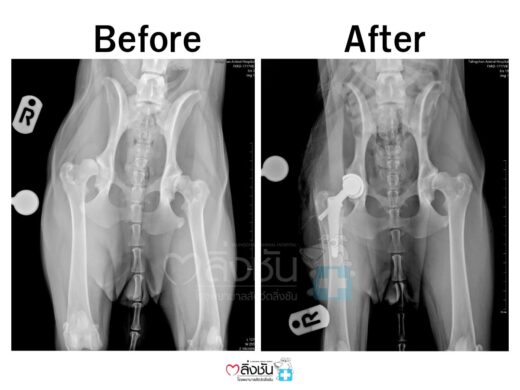
2. Surgically remove the head of the bone.
This surgery is only allowed for dogs weighing less than 17 kilograms, as dogs must use their hip muscles to support their weight. If the muscles are not strong, it may be difficult or impossible for the dog to walk. After surgery, the dog must be brought in for physical therapy to help the dog use its legs as quickly as possible. With this surgery, it is not possible to predict when the dog will be able to use its legs to walk, as the results depend on the care and physical therapy.
In addition, there are treatments for hip osteoarthritis that are categorized according to the appropriate age group.
If we detect hip dysplasia early, between 3-8 months of age, there are various treatment options tailored to different ages to help dogs use their legs normally, as follows:
- Ages 3-4 months (not exceeding 5 months)The procedure involves cauterizing the pelvic area with electricity to cause necrosis of that portion of the pelvic bone. As the dog grows, the pelvis will gradually change shape and develop a more pronounced hip roof covering the bone head.
This method is for early prevention. If the child is older than 5 months or there are already problems with the hip structure, this method cannot be used. - Under 8 months old And for large dog breeds...If X-rays in childhood reveal a predisposition to this condition, the doctor may perform pelvic rotation surgery to allow the pelvis to better cover the hip head. This helps to stabilize the hip joint and reduce the risk of degeneration.
However, there are limitations: it cannot be done if the hip head is already damaged or the hip joint is too loose.
Therefore, to prevent hip dysplasia from an early age, if you own a high-risk breed, you should have your dog X-rayed to monitor hip development from a young age. This way, if any problems are found, the veterinarian can advise and find the appropriate treatment for each individual dog.
Post-operative physical therapy
After surgery, owners should avoid allowing their dog to run or jump during the first month. Short walks are acceptable. Once their muscles have stabilized, they can gradually be allowed to walk more freely and engage in more active activities. Furthermore, owners should monitor their dog's weight, control their food intake, and provide appropriate exercise such as swimming or walks to ensure a good quality of life in the long term.
“Physical therapy is very important after a femur removal surgery. It's rehabilitation, whether it's swimming, massage, ultrasound. The use of lasers or electric shocks to the muscles To help him regain the use of his legs as quickly as possible.”
Physical therapy combined with exercise can help dogs move normally, whether through sit-up training, electrical stimulation, ultrasound massage, or laser pain relief. The advantage of physical therapy treatment is that it has few side effects and can effectively reduce pain, allowing dogs to walk well again and have a better quality of life.

Dr.Burapong Sutheerat
(Dr. Tang)
Orthopedics Center, Surgery Center

Dr.Maneeret Thamwipat
(Dr. Aum)
Orthopedics Center, Surgery Center

